
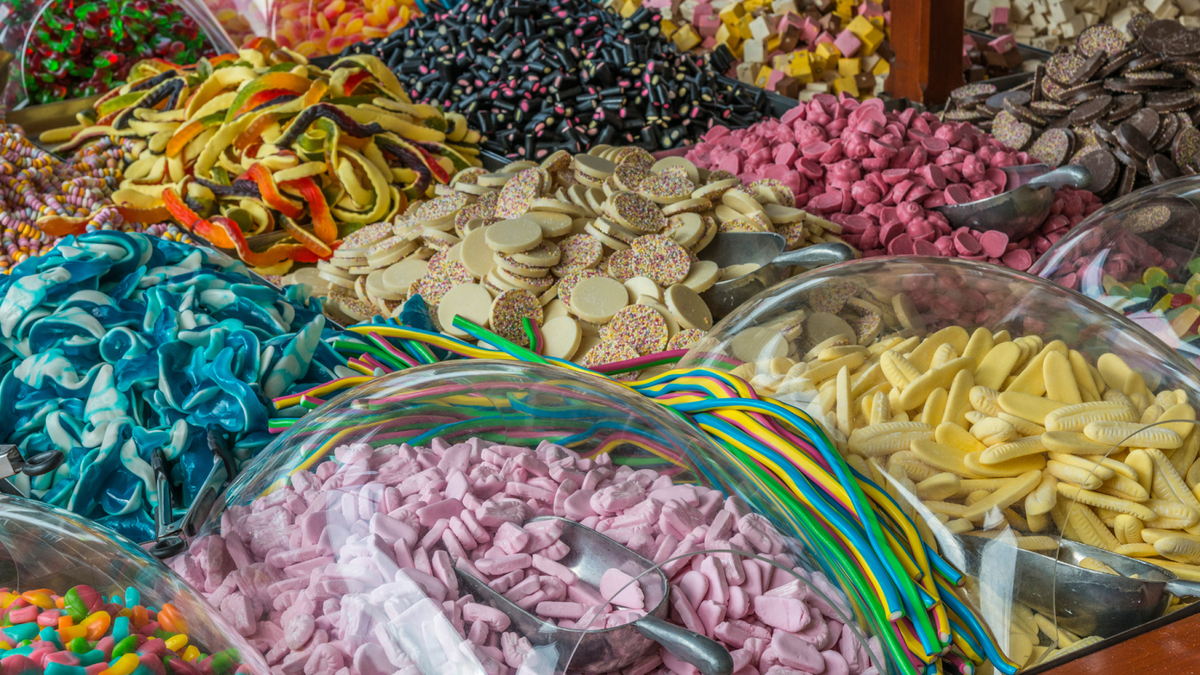
If you’ve ever been handed the job of “sorting the sweets” for a leaving do, a school fair or a waiting room, you’ll know it sounds easy right up until you’re standing in a supermarket aisle with six small bags in your basket and a growing sense that you’re about to run out. Buying sweets in bulk is one of those things that’s simple once you’ve done it a couple of times, and quietly stressful the first time round.
This guide covers the practical bits: who tends to buy in bulk, what formats exist, how to work out whether you’re actually saving money, how to store everything, and the slightly dull but important rules around allergens and resale.
Who actually buys sweets in bulk?
More people than you’d think. The obvious ones are offices and workplaces that like a communal jar on the reception desk or a Friday treat tin. Schools and nurseries buy for fairs, tombolas, reward boxes and end-of-term parties. Cafés and coffee shops pop a sweet on the saucer. Hair and beauty salons keep a bowl by the till. Market stall holders and small shops buy to weigh out and resell. Then there are party planners, wedding suppliers and sweet-cart hire businesses, who can get through a frankly alarming amount of foam shrimps in a single weekend.
What they all share is a need for variety, reliable quantity and not having to reorder halfway through the month. If that sounds like you, buying in larger formats from one place usually beats a string of small top-ups.
The usual bulk formats
Sweets tend to come in a handful of standard sizes, and each suits a different job.
- 3kg bags. The classic wholesale format for a single sweet. Good if you know one line will be a hit, such as fizzy cola bottles or jelly beans, and you want to refill jars over weeks.
- 2kg pouches. A very handy middle ground, especially for build-your-own mixes where you want a bit of everything rather than three kilos of one thing.
- Jars. Ready-filled and nice to look at, so they’re popular for gifts, desks and shop counters. You pay a little for the presentation.
- Buckets. Brilliant for parties and events. Big, sturdy, easy to carry and easy to dip into.
For events, a mix of two or three formats often works best: a couple of single-flavour bags for the favourites, plus a mixed pouch for variety.
Thinking in cost per 100g
This is the single most useful habit. Prices on the front of a bag can be misleading because a “bargain” 500g pouch and a “pricey” 2kg pouch aren’t comparable until you bring them down to the same unit. Divide the price by the weight in grams, multiply by 100, and you’ve got a cost per 100g you can compare across everything.
A few things to bear in mind when you do the sums:
- Bigger isn’t always cheaper. Sometimes the mid-size pouch has the better rate.
- Heavy sweets cost differently to light ones. A bag of airy marshmallows will feel bigger and weigh less than the same volume of boiled sweets.
- Delivery matters. A low sticker price can be undone by postage, so look at the total landed cost.
If you want a quick starting point, you can buy sweets in bulk online and compare the larger sizes against what you were about to spend on several smaller bags. The maths usually makes itself obvious within a minute or two.
Delivery thresholds and ordering sensibly
Many UK sweet shops offer free delivery once you pass a certain basket value, and the number is often around the twenty-pound mark. If you’d rather mix flavours than commit to one big bag, building a bag through pick and mix online is an easy way to hit that figure while still getting variety. For a bulk order that’s easy to clear, but it’s worth knowing the figure so you can avoid paying for postage on a small top-up. If you’ve got an event coming up, order a week or two early. Sweets are rarely the thing you want to be tracking a courier for on the morning of the party.
It also helps to order slightly more than you think you need. Leftover sweets store far better than a shortfall at a children’s party solves itself.
Shelf life and storage
Sweets keep well, but they’re not immortal, and different types behave differently. The general rule is cool, dry and airtight. Heat, damp and sunlight are the enemies.
- Boiled sweets and hard candy. The tough guys. They last well in a sealed container, but humidity makes them sticky and cloudy, so keep the lid on.
- Jellies and gummies. Best kept sealed and away from warmth. They can go firm and a bit chewy over time, or sweat and stick together if it’s warm. A tub or tin with a good lid is ideal.
- Chocolate. The fussy one. It dislikes heat, and you may see a pale bloom on the surface if it’s been through temperature swings. It’s usually still fine to eat, just less pretty. Keep it in a cool cupboard rather than a sunny office window sill.
- Fudge, toffee and chewy sweets. Airtight again, and eat them within a sensible window. Always check the date printed on the pack.
- Sherbet and powdery sweets. Damp is a disaster here. Keep them dry or they clump.
Always go by the best-before date on the packaging, and store open bags in clean containers rather than leaving them half-sealed.
Portioning for events
The question everyone asks: how much do I need? There’s no perfect formula, but a sensible approach is to think about who is attending and how long they’ll be around. A quick rule of thumb many party planners use is a modest handful per person for a short party, with extra if sweets are the main event or being taken home.
Some tips that help in practice:
- Pre-portion where you can. Little paper bags or cups mean fewer sticky fingers and more predictable servings.
- Offer variety, not volume. Six or seven types of sweet in smaller amounts looks generous and keeps people circling the table.
- Add scoops and tongs. It’s tidier and more hygienic than hands in the jar.
- Plan a gluten, nut and dietary-friendly corner. Mark it clearly so nobody has to guess.
If you’re running a sweet cart, keep a back-up bucket of your most popular lines out of sight. Foam sweets and fizzy ones tend to vanish first.
Labelling and allergens: Natasha’s Law in plain terms
If you’re giving sweets away at an office or a school fair, a casual label might be fine. If you’re selling them, things get stricter. Since October 2021, in the UK, food that is pre-packed for direct sale (meaning it’s packaged on the premises before the customer selects or orders it) needs a full ingredients list on the label, with the main allergens clearly highlighted. This is often called Natasha’s Law, after Natasha Ednan-Laperouse.
In plain terms, if you’re scooping sweets into bags or jars at your stall or shop before selling them, those bags generally need a proper label showing:
- the name of the food,
- a full ingredients list, and
- any of the 14 recognised allergens emphasised within that list, such as milk, gluten, nuts, soya and sulphur dioxide.
Sweets bought in their original manufacturer packaging and sold as they are carry their labelling already. It’s the repackaging that triggers the rule. Rules can be nuanced, so check the Food Standards Agency guidance or ask your local authority’s food team if you’re unsure about your set-up.
Resale basics: hygiene and registration
If you plan to resell, you’re running a food business, even a very small one. In the UK you generally need to register with your local council before you start trading, and it’s usually recommended to do it at least 28 days beforehand. It’s free, and you’ll be asked about where you’ll store and handle the food.
Beyond registration, the basics are common sense: clean hands and surfaces, covered storage, a dedicated scoop for each container, and keeping stock off the floor. A short food hygiene course is inexpensive and worth doing, and it reassures customers. Market traders in particular should be ready to show how they keep allergens separate and labelled.
Seasonal stocking
Demand swings through the year, and clever buyers plan around it. Halloween means orange and black mixes, sour sweets and gummy worms. Christmas brings candy canes, chocolate coins and giftable jars. Valentine’s calls for hearts and chocolates, while Mother’s and Father’s Day suit retro favourites. Summer events lean towards fizzy and ice-lolly-style sweets, but remember the heat if chocolate is on the menu.
Order seasonal lines early, because the best-selling flavours go quickly, and don’t over-commit to a theme that will be out of fashion in a fortnight. If you want a flexible base, choose mixed pouches over single-flavour bags so you can rotate flavours without committing to three kilos of something that might sit in the cupboard.
A final sweet checklist
Before you hit the order button, run through this short list:
- Know your headcount and event length.
- Compare cost per 100g, not headline price.
- Check delivery thresholds and lead times.
- Plan storage: cool, dry, airtight.
- Sort labels and allergen info if you’re reselling.
- Order a little extra and keep a back-up bucket.
Get those right and the sweets take care of themselves. Everyone smiles, nobody runs out, and you get quietly crowned the person who always knows how to organise a treat.
